
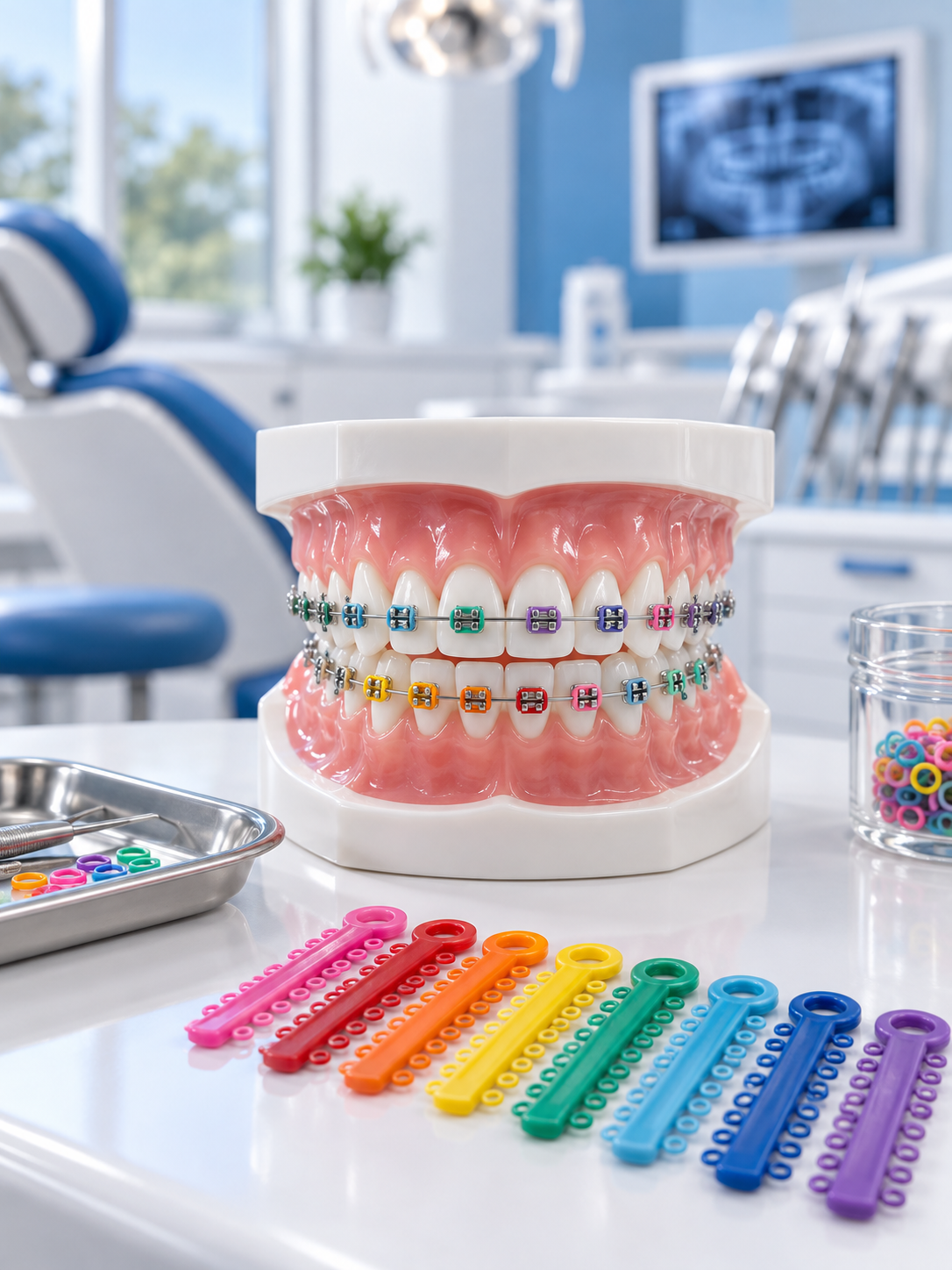
Orthodontic ligature ties are small components with a direct effect on chairside handling, archwire engagement, and the patient experience. A practical selection process considers bracket compatibility, elasticity, surface quality, color organization, and storage.
- Confirm that the tie size and material are compatible with the bracket system.
- Look for consistent elasticity and uniform molded shape.
- Smooth edges support predictable handling and patient comfort.
- Color organization can improve identification and patient communication.
- Store clean, dry, and protected; follow handling and disposal instructions.
What orthodontic ligature ties do
Elastic ligatures are used with compatible brackets to hold the archwire in place. Their behavior during placement and between appointments depends on material, dimensions, storage conditions, and the clinical environment. They should be selected as part of the treatment system rather than as an isolated accessory.
Five selection criteria
1. Bracket compatibility
Check the intended bracket type, tie dimensions, and manufacturer guidance. A tie that is too small, too large, or not intended for the bracket system may be difficult to place or may not perform as expected.
2. Consistent elasticity
Uniform stretch and recovery make chairside application more predictable. Review product specifications, packaging integrity, and lot consistency, especially when standardizing supplies across multiple operatories.
3. Surface and edge quality
Inspect ties for flash, irregular molding, tears, discoloration, or damaged sticks. Smooth, uniform components are easier to organize and help support controlled application.
4. Color assortment and visibility
Color can support quick identification and patient preference. For multicolor packs, clear organization helps prevent mix-ups and allows the clinical team to discuss choices efficiently.
5. Packaging and chairside organization
Sticks, modules, and labeled assortments should remain protected until use. Packaging that is easy to identify and store can reduce unnecessary handling and improve inventory control.
| Clinical priority | Feature to review | Practical benefit |
|---|---|---|
| Predictable handling | Uniform shape and elasticity | More consistent chairside workflow |
| Patient choice | Organized color range | Clearer communication and selection |
| Inventory control | Clear labeling and intact packaging | Faster identification and stock rotation |
Chairside handling and storage
- Keep unused ties in original packaging until required.
- Protect products from excessive heat, direct sunlight, moisture, and contamination.
- Check expiration or shelf-life information when supplied.
- Do not use components that appear torn, brittle, distorted, or contaminated.
- Follow the manufacturer’s single-use and disposal instructions.
Patient communication
Color preference can increase engagement, but the final selection should remain compatible with the clinical plan. Explain that appearance, staining, and replacement timing can vary, and provide care instructions appropriate to the appliance.